BOOK
APPOINTMENT
BOOK 
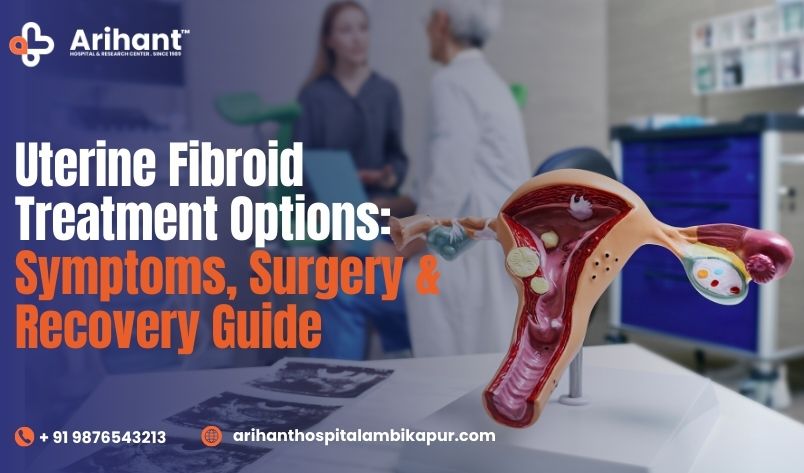
Sometimes the body grows little surprises where we didn’t invite them. Uterine fibroids are a bit like tiny knots in a soft piece of fabric. They grow from the muscle of the uterus. Most of the time they stay quiet, but sometimes they grow bigger and start bothering the body.
Many women notice them during routine checkups or when their periods start feeling different.
At Arihant Hospital Ambikapur, we first understand what the fibroid is doing, its size, place, and symptoms. Then we guide the right fibroid treatment in Ambikapur in a simple, supportive way.
Think of fibroids like uninvited guests in the uterus. Sometimes they stay quiet and cause no trouble. But if they grow bigger, they may start creating small inconveniences in daily life.
Here are a few signs the body may show:
✔ Heavy periods – Bleeding may be heavier or last longer.
✔ Pelvic pressure – A heavy feeling in the lower belly.
✔ Frequent bathroom trips – Fibroids may press on the bladder.
✔ Lower back ache – Some fibroids press on nearby nerves.
✔ Strong cramps – Period pain may feel worse than usual.
✔ Trouble getting pregnant – In some cases, fibroids may affect fertility.
Fibroid treatment is not the same for everyone. Hence, doctors usually look at a few important things before suggesting treatment:
Once these factors are understood, the doctor discusses the best approach. At Arihant Hospital Ambikapur, the goal is to explain the options clearly so women can choose what feels right for their health and lifestyle.
Not every fibroid needs immediate treatment.
Sometimes fibroids are small, do not grow quickly, and do not cause discomfort. In such cases, doctors may recommend something called watchful waiting.
This simply means keeping an eye on the fibroid rather than treating it right away.
The doctor may suggest regular checkups and ultrasound scans every few months to monitor the fibroid. If it stays the same size and symptoms remain mild, no active treatment may be needed.
Many women feel relieved when they hear this option because it means surgery is not always necessary.
However, if the fibroid starts growing or symptoms begin to interfere with daily life, the doctor may suggest moving to the next treatment option.
Sometimes the main issue caused by fibroids is heavy bleeding or painful periods.
In such situations, doctors may suggest medicines to help manage these symptoms.
These medicines work by helping control bleeding, reducing inflammation, or balancing hormonal changes that may influence fibroid growth.
It’s important to understand that medicines usually do not remove fibroids completely. Instead, they help manage the symptoms so that daily life becomes more comfortable.
When fibroids grow larger or start causing significant discomfort, doctors may recommend a procedure called myomectomy.
The name may sound complicated, but the idea behind it is simple.
In this procedure, the surgeon removes the fibroids while keeping the uterus intact.
This option is often chosen by women who may want to have children in the future because the uterus remains in place.
The surgeon carefully removes the fibroid tissue and repairs the uterus so it can continue functioning normally.
Depending on the size and location of the fibroid, myomectomy can be performed in different ways.
Medical technology has improved a lot over the years, and many surgeries today can be done with much smaller cuts.
This technique is known as laparoscopic surgery.
Instead of making a large incision in the abdomen, the surgeon makes a few tiny openings. A small camera is inserted through one of these openings, allowing the doctor to see inside the abdomen clearly on a screen.
Special surgical instruments are then used to remove the fibroid.
This approach offers several advantages:
Because of these benefits, many women today explore laparoscopic fibroid surgery in Ambikapur when surgery becomes necessary.
Doctors at Arihant Hospital Ambikapur carefully evaluate each case before recommending the most suitable surgical method.
In some situations, fibroids may grow very large or cause severe symptoms that do not improve with other treatments.
In these cases, doctors may recommend a hysterectomy. This procedure involves removing the uterus completely.
It permanently solves fibroid problems because the uterus is removed (where the fibroid grows).
Hysterectomy is usually considered when:
This treatment works differently from surgery. Instead of removing the fibroid directly, doctors reduce the fibroid by cutting off its blood supply.
Fibroids need blood to grow. When that supply is blocked, the fibroid slowly shrinks over time. This technique is called uterine fibroid embolization.
During the procedure, a doctor inserts a thin tube into a blood vessel and guides it toward the arteries supplying the fibroid. Tiny particles are then used to block those blood vessels.
Once the fibroid stops receiving blood, it gradually becomes smaller and symptoms begin to improve.
This option may be recommended for certain women depending on their fibroid type and medical history.
Doctors usually evaluate each case carefully before suggesting this approach.
Recovery after fibroid treatment in Ambikapur depends on the type of procedure and how your body heals. A few simple habits can make the healing period smoother.
✔ Take proper rest – Give your body time to recover, especially during the first few days.
✔ Follow medical advice – Take prescribed medicines and follow the doctor’s instructions carefully.
✔ Avoid heavy lifting – Skip lifting heavy objects for a few weeks after the procedure.
✔ Stay hydrated – Drink enough water to help your body regain strength.
✔ Eat light, healthy meals – Balanced food helps the body heal better.
✔ Do gentle movement – Short walks at home can improve circulation and reduce stiffness.
✔ Attend follow-up visits – Regular checkups help doctors monitor healing after procedures like laparoscopic fibroid surgery in Ambikapur.
Fibroids may sound scary at first, but understanding them makes everything easier. The right diagnosis and treatment plan can help manage symptoms and improve everyday comfort.
At Arihant Hospital Ambikapur, doctors focus on explaining each treatment option clearly so women feel confident about their health decisions.
If symptoms are affecting your routine, discussing fibroid treatment in Ambikapur with experienced specialists can help you understand the next steps.